
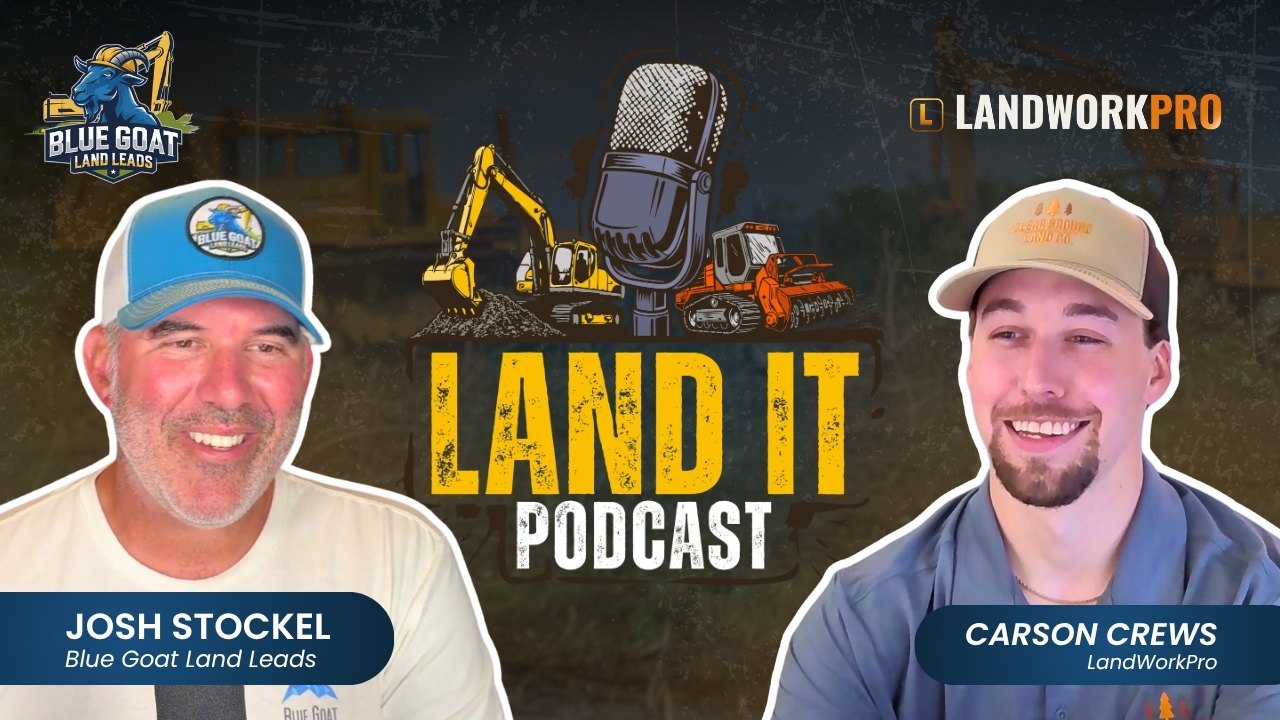
A bidding tool shaped by field work
Carson describes building LandWorkPro after pricing jobs for his family's mulching business while renting equipment. The idea began with bids based on each contractor's own rates, then expanded toward scheduling, lead tracking and job-linked expenses.
Walk the site, capture scope and mark boundaries
The voice-to-bid feature is intended to retain details discussed on a customer walk-through; a map lets the operator draw the work area. The customer can review a pictured scope and sign the quote before payment options appear.
Play episode 14.
Not every scope should get an instant bid
Carson says excavation and demolition need more caution than straightforward mulching because permits, utilities and unknown conditions may require an in-person review. The app is described as flagging those jobs for a site walk before the estimate is finalized.
Know costs before trusting a price
Operators enter their own day rates, labor and other costs rather than taking a universal price from the app. Carson wants job-level expense tracking and feedback to reveal when seemingly profitable bids miss real overhead.
The family business separates field judgment from digital work
Carson says his father initiated their clearing venture, while Carson brought an interest in the online side of the business. His father prefers the daily field work and is less interested in AI tools; Carson focuses more on marketing and the technology behind LandWorkPro. He also describes another partner helping with finance and marketing decisions. That division matters because the software did not emerge from a technology project in isolation. The team was pricing actual forestry mulching jobs while getting its own operation established. Their experience suggests that a useful field tool has to accommodate the person who walks and performs the work, not just the person comfortable configuring software from an office.
See the full conversation.
Acreage alone cannot tell a mulcher how long a job takes
Discussing his own work, Carson contrasts light material that a machine can pass through quickly with dense growth that must be chewed down in stages while the machine regains working flow. That difference complicates a simple price-per-acre shortcut, even before travel, equipment rental and the desired finish are considered. The company began by renting through a local dealer rather than immediately buying a skid steer, giving the team a way to start work while learning its needs. Carson's estimating product is built against that field reality: the contractor's configured rates matter, but the walk-through still has to describe what is actually on the property and what the customer expects to be done.
Product feedback has to reach beyond one Tennessee crew
Carson says testing LandWorkPro in Clear Ground's operation revealed improvements, but one team's experience cannot represent every contractor. He asks users in other states to describe workflows and costs that differ from those in middle Tennessee. The discussion returns to whether the tool is easy to use in the field, including marking a work area on a phone, and whether existing features work before more are added. These are statements of his product-development approach, not independent verification of app performance. For an operator evaluating software, the useful question is whether the tool fits how their crew actually scopes and sells work.
Ideas to take back to the work
- Set the app's inputs to your own costs and rates; software cannot supply a universal profitable price.
- Use maps and a signed scope to reduce disputes about which area will be worked.
- Keep a human site review for excavation or demolition with utilities, permits or hidden conditions.
Questions from this conversation
What does LandWorkPro's voice-to-bid feature do?
Carson says it captures the conversation during a site walk and uses the contractor's configured trade and rate information to help assemble a bid.
Why can a customer sign a mapped quote?
The app shows the proposed work area and scope so the customer can confirm the boundaries and approve what was agreed before payment.
Does the app instantly approve every type of job?
No. Carson says excavation and demolition bids can require a site walk and review before a number is finalized.
Did Carson's clearing company buy a skid steer immediately?
No. Carson says the company started by renting equipment through a local dealer and continued that relationship while learning the forestry mulching business. That let the family team take on work without making an immediate purchase. He discusses owning a machine as a later decision, with condition, maintenance and fit for their work all relevant.
Why does Carson ask contractors outside Tennessee for product feedback?
He says his own clearing operation can test LandWorkPro, but a single middle Tennessee crew cannot represent how contractors in other states price and manage their work. He wants direct feedback about different workflows and missing features, and talks about polishing what already exists rather than assuming every proposed addition should be released immediately.